
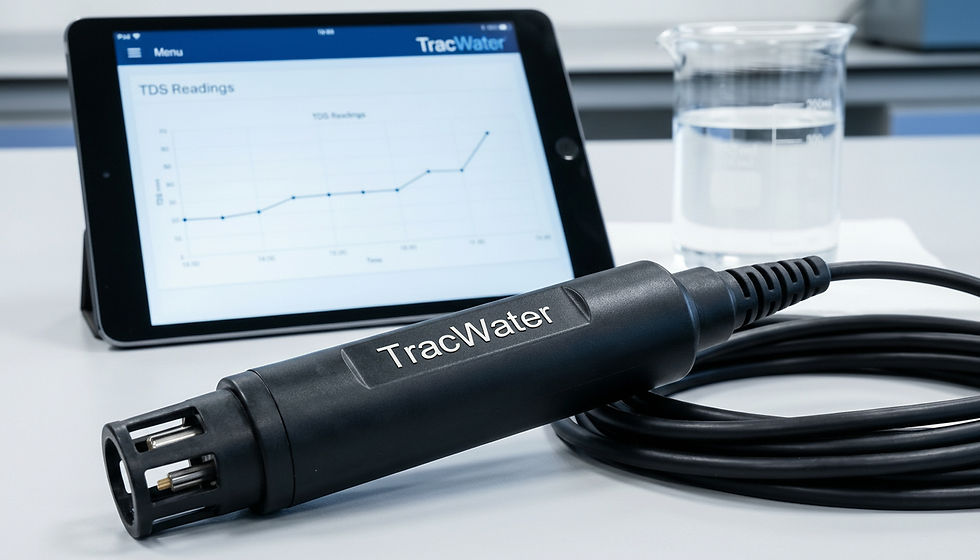
Algae Sensors
‘Product image is for illustration purposes only, the actual product may vary.’
Specifications
Name: TracWater Self-cleaning Blue-green Algae Sensor
Model: TW-4727A
Measuring principle: Fluorescence method
Range: 0- 300,000 cells/mL (Customisable 0- 2,000,000 cells/mL)
Resolution: 1cells/mL
Size: Φ45mm*190.8mm
Note: Please contact TracWater to get a copy of the full sensor specifications.
TracWater Self-cleaning Blue-green Algae Sensor
Model number:
TW-4727A
Product description:
TW-4727A Self-cleaning Blue-green Algae Sensor adopts fluorescence method, offering a more efficient and faster alternative to manual counting. It enables real-time online monitoring. The TW-4727A with a self-cleaning brush can effectively eliminate air bubbles and minimise contamination, leading to longer maintenance periods.
Overview
TracWater TW-4727A Blue-green Algae Sensor adopts the fluorescence method, delivering superior efficiency and speed compared to traditional manual counting techniques. It ensures enhanced repeatability and stability while effectively eliminating bubbles and minimising contamination effects on measurements through its self-cleaning brush, thereby extending the maintenance cycle. This enables excellent long-term online stability and provides early warnings for algal growth.
Features
Digital sensor with RS-485 output and MODBUS protocol support.
Employs advanced fluorescence sensing technology, offering greater convenience and efficiency over traditional manual counting methods.
Water samples require no special treatment, making the sensor ideal for continuous online monitoring.
Equipped with a cleaning brush to prevent microbial attachment and extend the maintenance interval.
All calibration data is stored directly in the sensor, enabling on-site installation and immediate use.
Applications
Drinking Water Reservoirs: Monitoring for the presence of harmful algal blooms to ensure the safety of drinking water supplies.
Recreational Waters: Ensuring the safety of swimming areas and other recreational water bodies.
Aquaculture: Protecting aquaculture operations from the harmful effects of cyanobacteria.
Environmental Monitoring: Assessing the health of lakes, rivers, and coastal waters.
