
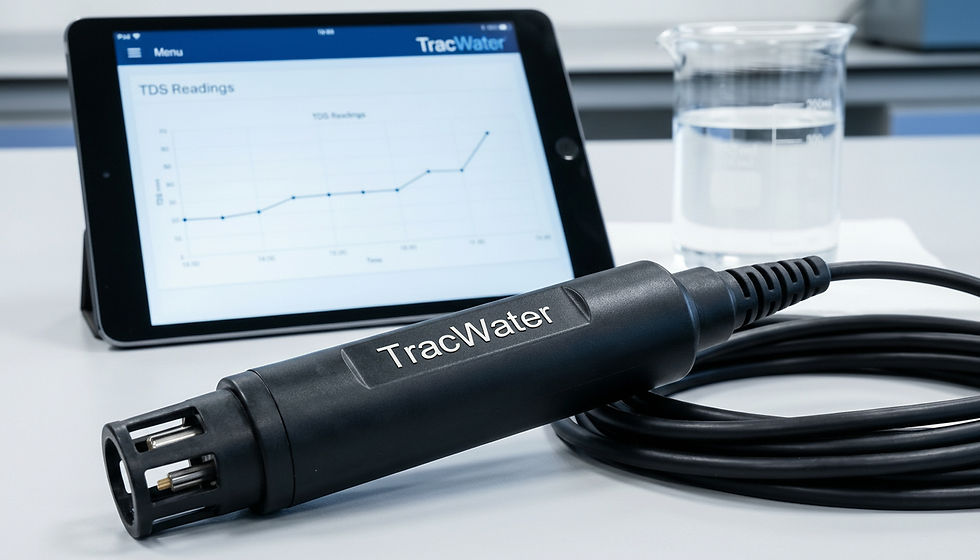
Algae Sensors
‘Product image is for illustration purposes only, the actual product may vary.’
Specifications
Name: TracWater Online Blue-green Algae Sensor
Model: TW-4827B
Measuring principle: Fluorescence method
Range: 0- 300,000 cells/mL (Customisable 0- 2,000,000 cells/mL)
Resolution: 1cells/mL
Size: Φ22mm*175.5mm
Note: Please contact TracWater to get a copy of the full sensor specifications.
TracWater Online Blue-green Algae Sensor
Overview
TracWater TW-4827B online blue-green algae sensor adopts a fluorescence-based method, providing a more efficient and rapid solution compared to traditional manual counting techniques. It supports real-time online monitoring with enhanced repeatability and stability. The sensor features RS485 output and MODBUS protocol communication. It is extensively utilised in surface water monitoring, drinking water systems, water supply networks, and smart water management solutions.
Features
Digital sensor with RS-485 output and MODBUS protocol support.
Utilises advanced fluorescence sensing technology, offering greater convenience and efficiency compared to traditional manual counting methods.
Water samples require no special treatment, making the sensor suitable for continuous online monitoring applications.
Easy to install on-site and capable of identifying potential algal blooms before they cause issues, ensuring proactive environmental management.
All calibration data is stored directly in the sensor, enabling on-site installation and immediate use.
Applications
Surface Water Monitoring: Continuous monitoring of lakes and reservoirs to detect and manage harmful algal blooms. Tracking water quality in rivers and streams to identify and address pollution sources.
Drinking Water Safety: Source water monitoring to ensure raw water quality in reservoirs and treatment plants. Distribution network monitoring throughout the supply network to prevent contamination.
Aquaculture: Protecting fish farms from the adverse effects of cyanobacteria.
Recreational Water Monitoring: To maintain safe conditions for swimming and other recreational activities.
